


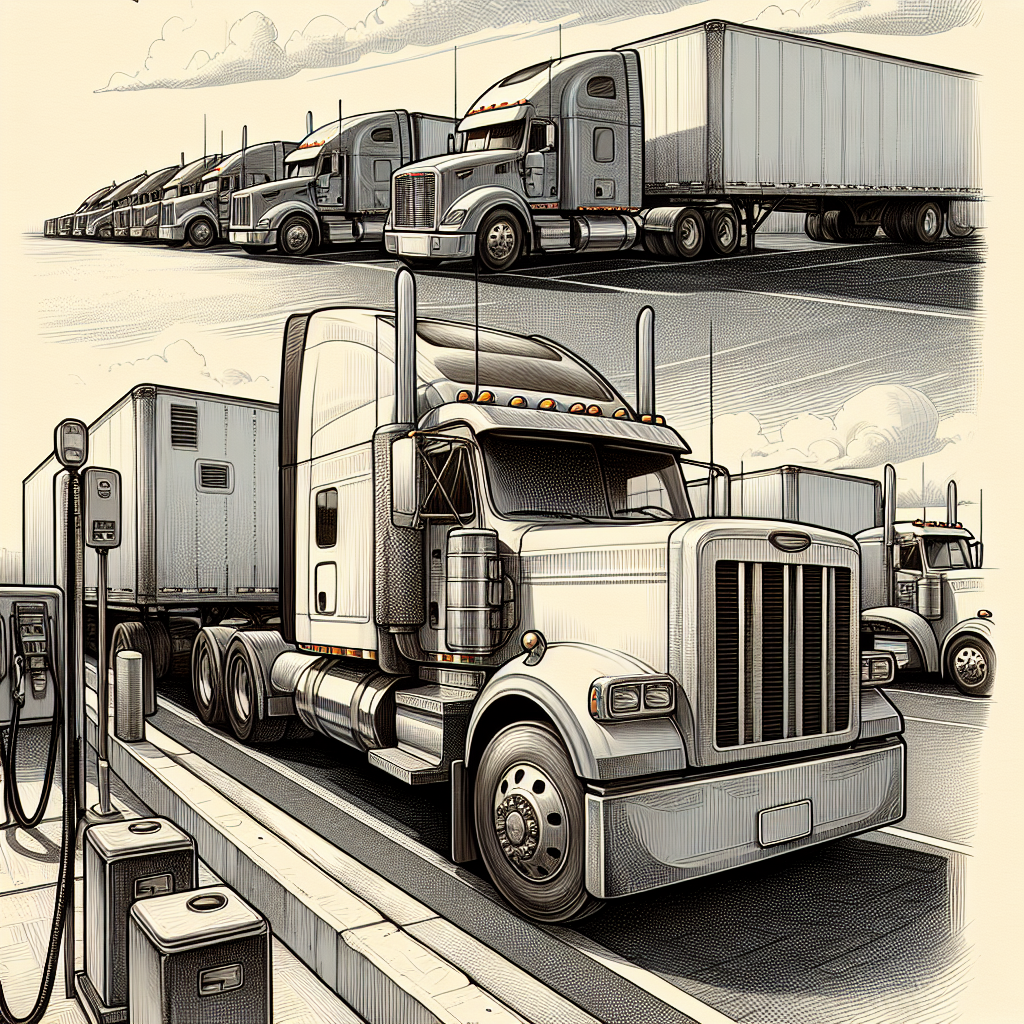
Extra Capacity When You Need It, Without the Long-Term Commitment
Quality Wheels’ on-demand capacity service provides flexible trucking solutions for surge demand, seasonal peaks, promotional events, and unexpected shipping needs. Access reliable capacity with the same 98.2% on-time delivery you’d expect from contracted freight—without the commitment.
98.2%
On-Time Delivery
100%
Tender Acceptance
108
Truck Fleet
#36
Top Carrier Rank
What is On-Demand Capacity?
On-demand capacity provides trucking services on an as-needed basis, without long-term contracts or volume commitments. It’s the freight equivalent of “on-call” resources—available when you need them, scalable to match your requirements, and flexible enough to handle unpredictable demand.
How It Differs from Other Services
vs. Dedicated Lanes: Dedicated lanes require volume commitments and long-term contracts. On-demand capacity has no minimums or commitments—use it when you need it, skip it when you don’t.
vs. Spot Market: Traditional spot market freight means competing for capacity with unpredictable rates and service levels. Quality Wheels’ on-demand capacity provides priority access to reliable carriers at pre-negotiated rate structures.
vs. Contract Freight: Contract freight typically requires minimum volumes, regular frequency, and term commitments. On-demand capacity provides flexibility without obligations.
The advantage: On-demand capacity combines the flexibility of spot market with the reliability of contracted services.
When You Need On-Demand Capacity
Seasonal Volume Surges
The Challenge: Retail holiday peaks, agricultural harvest seasons, back-to-school surges, or industry-specific seasonality creates 2-5x normal shipping volume for 6-12 weeks per year.
The Solution: On-demand capacity scales up during peak periods without paying for unused capacity during slow periods.
Example scenarios:
- Retailers during November-December holiday surge
- Agricultural operations during spring planting or fall harvest
- Consumer goods companies during back-to-school season
- HVAC manufacturers during summer air conditioning season
- Tax preparation companies during January-April
- Construction suppliers during spring-summer building season
Promotional Events & Product Launches
The Challenge: Marketing campaigns, product launches, or promotional events create temporary demand spikes that exceed baseline capacity.
The Solution: Ramp up capacity for the specific event duration, then scale back down afterward.
Example scenarios:
- Black Friday / Cyber Monday inventory positioning
- New product launches with advertising campaigns
- Trade shows requiring product delivery to venues
- Promotional events (Buy One Get One, flash sales, etc.)
- Special edition or limited-time offerings
Unexpected Demand Fluctuations
The Challenge: Business isn’t always predictable. Customer orders surge unexpectedly, competitors’ stockouts drive demand to you, or viral social media creates sudden product popularity.
The Solution: On-demand capacity responds quickly to unexpected opportunities without leaving you scrambling for trucks.
Example scenarios:
- Social media viral product moment
- Competitor stockout driving customers to your products
- Weather events creating demand surges (snow shovels, generators, etc.)
- News events driving category demand
- Unforecasted customer orders
Capacity Gaps & Carrier Failures
The Challenge: Your primary carrier fails to show up, experiences equipment breakdown, or can’t cover all your freight on a busy day.
The Solution: On-demand capacity provides backup when primary carriers fall short.
Example scenarios:
- Regular carrier can’t provide truck due to equipment issues
- Dedicated lane carrier has driver shortage on specific day
- Volume exceeds contracted capacity limits
- Last-minute orders requiring additional trucks
Growth & Expansion
The Challenge: Your business is growing, but you’re not ready to commit to additional dedicated capacity or expand your carrier base permanently until volume stabilizes.
The Solution: Use on-demand capacity to handle growth while evaluating whether it’s sustained enough to justify dedicated resources.
Example scenarios:
- New customer accounts requiring temporary capacity boost
- Geographic expansion into new markets
- Product line expansion creating additional shipping needs
- Testing new distribution channels before full commitment
Contingency & Disaster Recovery
The Challenge: Natural disasters, facility closures, equipment failures, or supply chain disruptions require rapid logistics adjustments.
The Solution: On-demand capacity provides flexible transportation to reroute, expedite, or adjust shipping plans quickly.
Example scenarios:
- Warehouse fire requiring rerouting through alternative facility
- Weather events closing regular routes or facilities
- Equipment failures at customer locations requiring alternate delivery sites
- Supply chain disruptions necessitating new sourcing locations
Quality Wheels On-Demand Capacity Advantages
100% Tender Acceptance
Our 100% tender acceptance rate means when you request on-demand capacity, you get a “yes.” No capacity surprises. No “sorry, we can’t help you.” Just reliable service when you need it most.
98.2% On-Time Delivery
On-demand doesn’t mean compromised service. Our 98.2% on-time delivery rate extends to on-demand capacity, ensuring your surge freight arrives on schedule just like dedicated shipments.
Pre-Qualified Carrier Network
Quality Wheels maintains relationships with hundreds of pre-vetted carriers who meet our strict performance and safety standards. When you need on-demand capacity, you’re not getting random spot market carriers—you’re getting vetted professionals.
Our carrier qualification standards:
- Minimum safety rating (FMCSA Satisfactory or better)
- Insurance verification ($1M+ cargo, $1M+ liability)
- Equipment standards and maintenance records
- Performance history and on-time delivery metrics
- Communication capabilities and technology integration
- Background checks and compliance verification
Predictable Pricing Structure
No rate surprise games. While on-demand capacity pricing adjusts based on market conditions, Quality Wheels provides:
- Transparent rate quotes upfront
- Explanation of pricing factors
- Historical rate data for comparison
- Volume-based discounts when applicable
- No hidden fees or surprise charges
Same Technology & Visibility
On-demand capacity shipments receive the same technology platform and visibility as dedicated freight:
- Real-time GPS tracking
- Guaranteed Shipment Visibility platform access
- Proactive updates and communication
- Electronic POD delivery
- Performance reporting and analytics
Rapid Response Time
Speed matters when you need capacity:
- Quote response within 1-4 hours for standard requests
- Immediate response for urgent/same-day needs (call 847-457-0990)
- Equipment assignment typically within 24 hours for standard pickup
- Expedited equipment available in 2-8 hours when needed
On-Demand Capacity Service Models
Surge Capacity on Retainer
Best for: Businesses with predictable peak seasons needing guaranteed surge capacity.
How it works:
- Pre-negotiate rates and capacity levels for peak periods
- Commit to estimated volume range (not guaranteed minimum)
- Get priority access to capacity during peak season
- Pay retainer fee or slightly higher base rates for guarantee
Benefits:
- Guaranteed capacity during tight market periods
- Better rates than pure spot market
- Pre-planned logistics for known peaks
- Reduces stress during busiest times
Flex Capacity Add-On
Best for: Customers with existing Dedicated Lanes needing occasional overflow.
How it works:
- Baseline dedicated capacity for regular needs
- On-demand capacity for volume exceeding baseline
- Blended pricing (dedicated rates for baseline, premium for flex)
- Seamless integration—same processes and systems
Benefits:
- Optimize costs (pay for regular capacity at dedicated rates, overflow at market rates)
- Single carrier relationship for both dedicated and flex
- Consistent service standards across all freight
- Simplified coordination
Spot On-Demand
Best for: Infrequent or unpredictable capacity needs with no pattern.
How it works:
- Request capacity as needed with no advance commitment
- Quoted at prevailing market rates
- Equipment sourced from Quality Wheels or vetted carrier network
- Standard lead time (24-72 hours typical)
Benefits:
- No commitment or minimums
- Access to capacity when needed
- Quality Wheels service standards
- No contract complexity
Emergency On-Demand
Best for: Urgent, immediate capacity needs (carrier failure, emergency orders, etc.).
How it works:
- Call our emergency line for immediate response
- Equipment dispatched ASAP (2-8 hours typical)
- Premium pricing for immediate service
- 24/7 availability including weekends/holidays
Benefits:
- Solves immediate crisis situations
- Prevents production shutdowns or customer disappointments
- Faster than sourcing spot market yourself
- Reliable equipment and drivers
Industries Using On-Demand Capacity
Retail & E-Commerce
Why they need it:
- Holiday peaks (Black Friday through Christmas)
- Back-to-school surges
- Promotional events and flash sales
- New store openings requiring inventory staging
Typical usage:
- 50-200% capacity increase November-December
- Surge capacity for 2-week promotional events
- Overflow when sales exceed forecasts
Consumer Packaged Goods (CPG)
Why they need it:
- Promotional displays requiring extra shipments
- New product launches with marketing campaigns
- Seasonal flavors or special editions
- Retailer ordering pattern fluctuations
Typical usage:
- Product launch capacity for 4-8 weeks
- Promotional support for retail partners
- Unexpected reorders from successful campaigns
Manufacturing
Why they need it:
- Production volume fluctuations
- Customer order surges
- Raw material sourcing from new suppliers
- Equipment relocation or facility moves
Typical usage:
- Overflow when production exceeds forecasts
- One-time project freight
- Ramp-up during new customer onboarding
Food & Beverage
Why they need it:
- Seasonal products (holiday foods, summer beverages)
- Weather-driven demand surges
- Special event catering and distribution
- Promotional displays for retailers
Typical usage:
- Seasonal peaks (20-100% over baseline)
- Weather event response (cold weather = soup surge)
- Event-driven demand (Super Bowl snacks, etc.)
Agriculture & Farming
Why they need it:
- Harvest season equipment and supply delivery
- Seasonal peak for seed, fertilizer, and chemicals
- Time-sensitive planting and harvesting windows
- Weather-dependent logistics needs
Typical usage:
- Spring planting: 3x capacity for 6-8 weeks
- Fall harvest: 4x capacity for 8-12 weeks
- Emergency delivery during narrow weather windows
Building Materials & Construction
Why they need it:
- Seasonal construction peaks (spring/summer)
- Large project freight needs
- Weather-dependent delivery requirements
- Emergency material delivery for project delays
Typical usage:
- Summer peak: 50-150% over winter baseline
- Project-specific capacity for 2-8 weeks
- Emergency deliveries when weather delays clear
Technology for On-Demand Capacity
AI-Driven Capacity Prediction
Our AI-Driven & API-Integrated Logistics platform helps optimize on-demand capacity:
Predictive analytics:
- Historical pattern analysis to forecast your capacity needs
- Market condition monitoring to predict tight capacity periods
- Proactive capacity sourcing before you request it
- Rate forecasting to help you plan budgets
Smart matching:
- Automated matching of your freight with available capacity
- Carrier selection based on performance history and specialization
- Route optimization for fastest, most cost-effective service
- Equipment type matching to your freight requirements
Real-Time Capacity Marketplace
Quality Wheels’ on-demand capacity leverages a network of vetted carriers:
- Real-time equipment availability across our network
- Instant rate quotes based on current market conditions
- Automated booking and confirmation
- Capacity visibility for planning and forecasting
System Integration
Connect your systems for seamless on-demand capacity requests:
TMS Integration: Request capacity directly from your TMS—no manual quoting process needed.
API Connectivity: Programmatic capacity requests and booking via API for high-volume users.
EDI: Standard electronic data interchange for automated tendering and tracking.
Email/Portal: Simple web portal or email requests for occasional users.
Pricing & Cost Management
On-Demand Pricing Factors
On-demand capacity pricing varies based on:
Market Conditions:
- Current capacity tightness in specific lanes
- Seasonal demand patterns
- Fuel prices and general market rates
Lead Time:
- More notice = better rates (5-7 days notice typically 10-20% lower than same-day)
- Rush/emergency capacity commands premium pricing
- Planned surge capacity (with advance warning) gets preferential rates
Volume:
- Higher volumes enable better rates (10+ loads = volume discount)
- Repeat on-demand usage builds pricing history
- Bundled freight to same region reduces rates
Freight Characteristics:
- Standard dry van freight: Baseline rates
- Specialized equipment (flatbed, reefer): Higher rates
- Oversize/overweight: Premium rates
- Hazmat or high-value: Additional charges
Cost Comparison Models
Scenario 1: Dedicated + On-Demand Hybrid
Retailer with baseline 20 loads/week and Q4 peak of 40 loads/week:
- Option A (All Dedicated): Pay for 40 truck capacity year-round = $2.4M/year
- Option B (20 Dedicated + 20 On-Demand for 12 weeks): $1.2M dedicated + $350K on-demand = $1.55M/year
- Savings: $850K/year (35% reduction)
Scenario 2: All On-Demand vs. Dedicated
Manufacturer with consistent 10 loads/week year-round:
- Option A (All On-Demand): $750K/year at market rates
- Option B (Dedicated): $600K/year with contract rates
- Cost difference: $150K more for on-demand, but provides complete flexibility
When on-demand makes sense despite higher per-load costs:
- Unpredictable volumes
- Growing business without established patterns
- Testing new markets/customers
- Seasonal businesses with 4-6 month shipping season
Getting Started with On-Demand Capacity
Step 1: Needs Assessment
Identify your capacity patterns:
- When do you typically need additional capacity?
- What’s your surge volume compared to baseline?
- How much advance notice can you typically provide?
- What equipment types do you need?
Step 2: Service Model Selection
Choose the right approach:
- Surge capacity on retainer for predictable peaks
- Flex add-on if you have existing dedicated lanes
- Spot on-demand for unpredictable needs
- Emergency service for backup when primary carriers fail
Step 3: System Setup
Technology integration options:
- Portal access for manual booking
- TMS integration for automated requests
- API connectivity for programmatic booking
- Email/phone for simple occasional use
Step 4: Carrier Onboarding
Facility setup:
- Provide facility information (addresses, hours, dock procedures)
- Set up contacts and communication preferences
- Review any special requirements or protocols
- Configure tracking and visibility preferences
Step 5: First Shipment & Optimization
Launch and improve:
- Process first on-demand shipment
- Gather feedback on experience
- Refine processes and communication
- Analyze performance and costs
- Adjust service model if needed
Combining Services for Optimal Results
Dedicated Lanes + On-Demand Capacity
The perfect hybrid:
- Use Dedicated Lanes for baseline, regular volume
- Add on-demand capacity for peaks and overflow
- Optimize total transportation costs
- Ensure capacity availability during critical periods
On-Demand + Supply Chain Consulting
Strategic optimization:
- Supply Chain Consultations helps identify optimal dedicated vs. on-demand mix
- Forecast capacity needs more accurately
- Develop contingency plans for disruptions
- Negotiate best rates through volume aggregation
Multiple Service Levels
Tailor service to freight priority:
- Standard transit for most on-demand capacity
- Expedited service for time-critical surge freight
- Drop trailer service for flexible loading during peaks
- Mix and match based on specific shipment requirements
Frequently Asked Questions
How quickly can you provide on-demand capacity? Standard lead time is 24-48 hours. Emergency capacity available in 2-8 hours. Best practice: provide 3-5 days notice when possible for better rates and equipment selection.
Is there a minimum number of loads or commitment? No minimums or commitments for pure on-demand capacity. Use it when you need it, skip when you don’t.
How much more expensive is on-demand vs. dedicated? Typically 10-30% premium over equivalent dedicated rates, depending on market conditions and lead time. Emergency same-day capacity can be 50-100%+ premium.
Can I get preferential rates if I use on-demand capacity regularly? Yes! Frequent on-demand users get volume-based pricing and priority access to capacity during tight market conditions.
What if I need capacity but you’re sold out? Our 100% tender acceptance commitment extends to on-demand capacity for customers who provide reasonable notice. We maintain extensive carrier relationships to source capacity even in tight markets.
Do I get the same service quality as dedicated freight? Absolutely. Same 98.2% on-time delivery standards, same technology platform, same customer service. The only difference is the contractual arrangement.
Can I convert on-demand lanes to dedicated if volume becomes regular? Yes! We regularly work with customers to transition high-volume on-demand lanes to dedicated service with better rates and guaranteed capacity.
Flexible Capacity Without the Commitment
Stop worrying about surge demand, seasonal peaks, and unexpected capacity needs. Quality Wheels’ on-demand capacity provides the trucks you need, when you need them, with the same reliability and service quality you’d expect from dedicated freight.
Get started with on-demand capacity:
📞 Call: (847) 457-0990 📧 Email: [email protected] 🌐 Inquire: Request On-Demand Capacity 📍 Location: 1300 Remington Rd Suite D, Schaumburg, IL 60173
Capacity when you need it. Flexibility when you don’t.
Ready to Get Started?
Partner with an award-winning carrier trusted by shippers nationwide.